Train one small target at a time
A single tone group, phrase set, or sentence pattern is much easier to stabilize than a large mixed batch.
If you can hear Cantonese but still cannot say it clearly, the missing piece is usually active practice: repeat-after-me drills, recording, and short daily speaking drills.
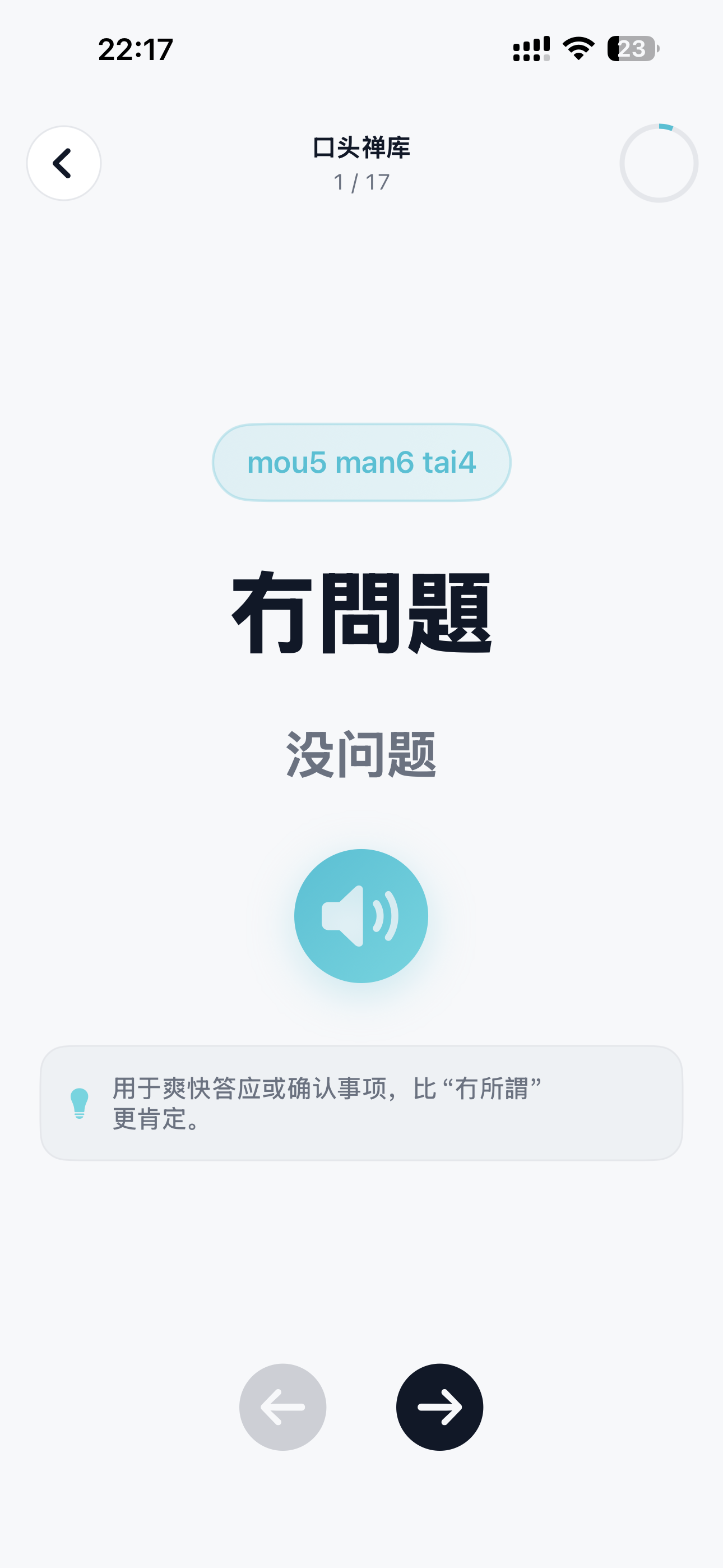
A single tone group, phrase set, or sentence pattern is much easier to stabilize than a large mixed batch.
Passive listening improves recognition, but spoken repetition builds the motor pattern you need for real speech.
What feels correct often sounds different when you play it back. That makes recording one of the fastest self-checks you can use.
Built around speaking, not just reading about sounds
Keep each drill narrow so your tones and rhythm have a better chance to stabilize.
Say the phrase right after hearing it instead of delaying the speaking part.
Self-playback makes pronunciation gaps much more obvious than intuition alone.
Pronunciation becomes more natural when it is trained inside useful expressions.
YueLiuli helps you repeat, record, and correct spoken Cantonese so tones and rhythm become easier to control over time.